The Samsung Galaxy Note 20 phablet lineup will not support a WQHD+ 120Hz refresh rate as previously rumored, according to a top Galaxy smartphone leaker.
Twitter user Ice Universe said this morning that they're "not optimistic" about the Galaxy Note 20 offering simultaneous high resolution and high refresh rate despite suggesting otherwise earlier this month. Like the Samsung Galaxy S20, it seems the Note 20 will be able to manage QHD resolution and a 120Hz refresh rate, but not both at once.
Note20 series has completely solved the camera focusing problem, but WQHD+120Hz is still not optimistic.June 29, 2020
Leakers double back on their intel all the time, but this correction comes as a slight letdown and calls into question the roles Samsung's rumored LTPO display on the top shelf models will play. Because LTPO display technology allows better power efficiency, we believed it could support a WQHD+ 120Hz refresh rate.
If this isn't the case and Ice Universe's latest tip is correct, Note 20 users will have to pick between a great resolution or killer refresh rate at any given time.
Ice Universe has also said that the LTPO display and 120Hz refresh rate could come at a premium. It might be exclusive to the higher-end Galaxy Note 20 Plus or Ultra variant, while the entry-level Note 20 will be limited to 60Hz animations.
On the bright side, Ice Universe said Samsung has fixed the camera focusing issues that riddled S20 reviewers before the phone hit shelves back in February. The company quickly patched the problem with a software update, but it's still reassuring to hear that users shouldn't experience similar woes this time around.
For the Galaxy Note 20 Ultra, we're expecting a 108MP main sensor, a 13MP telephoto lens with 50x zoom and a 12MP ultra wide angle camera. The standard Note 20 will feature a 12MP main, 64MP telephoto and 12MP ultra wide lens.
All the Galaxy Note 20 models could launch at a Samsung event on August 5. The same Unpacked keynote could see the release of the Galaxy Fold 2 along with several other Samsung products, including the Galaxy Tab S7 tablet and a 5G version of the Galaxy Z Flip.
June 30, 2020 at 01:10PM
https://ift.tt/2NIu3M4
Samsung Galaxy Note 20 display leak is a big letdown - Tom's Guide
Samsung Electronics America today introduced its second-generation quad-level cell (QLC) flash drive, the 870 QVO SATA SSD, that is setting a new standard for high-capacity consumer storage. Featuring an industry-leading capacity of up to eight terabytes (TB),1 the new SSD delivers an uncompromising mix of speed, storage capacity and reliability for mainstream and professional PC users.
870 QVO
In the past, consumers have had to choose between SSDs – which provide superior performance – and HDDs, which traditionally offer greater capacity. Samsung’s 870 QVO SSD, however, is able to reliably offer the best of both worlds, making it an optimal choice for mainstream PC users who prioritize performance and value, as well as for professional users who require high levels of capacity.
Recommended News
“Following the launch of Samsung’s first consumer QLC drive – the 860 QVO – in 2018, we are releasing our second-generation QVO SSD which offers doubled capacity of 8TB as well as enhanced performance and reliability,” saidDr. Mike Mang, vice president of the Memory Brand Product Biz Team at Samsung Electronics. “The new 870 QVO will allow more consumers to enjoy the performance benefits of an SSD at HDD-like capacities.”
870 QVO Online Features
The 870 QVO offers best-in-class sequential read and write speeds of up to 560 MB/s and 530 MB/s respectively2, with the drive’s Intelligent TurboWrite technology allowing it to maintain peak performance levels using a large variable SLC buffer3. The 870 QVO also delivers a 13% improvement in random read speed4 compared to the 860 QVO, making it ideally suited for everyday computing needs such as multitasking, gaming and web browsing. The renewed Data Migration and Magician 6 softwares provide a host of improved and added features, enabling users to upgrade, manage and optimize their SSDs with greater ease.
In addition to the industry-leading capacity and performance, the 870 QVO provides an exceptional endurance rating of up to 2,880 terabytes written (TBW), or a three-year limited warranty5.
870 QVO
870 QVO
870 QVO
870 QVO
870 QVO
870 QVO
The 870 QVO will be available starting June 30th at select retailers and Samsung.com starting at $129.99 for the 1TB, $249.99 for the 2TB and $499.99 for the 4TB. The 870 QVO 8TB will be available in August. To find out more, please visit samsung.com/us/computing/memory-storage/.
1 Actual storage capacity may differ from what is indicated on product labels due to a certain portion of the drive’s capacity being taken up by system files and maintenance
2 Performance may vary based on which version of the firmware the SSD is running and system hardware and configuration. Test system configuration: Intel® Core i7-7700k CPU@4.20GHz, DDR4 1200MHz 32GB, OS -Windows 10 Pro 64bit, Chipset – ASUS-PRIME-Z270-A
3 The Intelligent TurboWrite technology adjusts the buffer size to optimal level within the usable disk space; up to 42 GB for 1 TB model and up to 78 GB for 2TB, 4 TB, and 8TB models.
4 Random performance improved up to 13% with QD1 Random read
5 Product guaranteed according to limited 3-year warranty or TBW rating, whichever comes first. For more information on warranty, please find the enclosed warranty statement in the package.
Stop me if you’ve heard this one before. A major company just announced that it will not be taking part in an in-person trade show, instead opting to go online only. After early reports from South Korean press, Samsung has just confirmed with TechCrunch that it will not be taking part in Europe’s largest consumer tech trade show.
“We have taken the exciting decision to share our latest news and announcements at our own digital event in early September,” the company tells TechCrunch. “While Samsung will not be participating in IFA 2020, we look forward to our continued partnership with IFA in the future.”
The decision comes as the COVID-19 pandemic continues to surge. Earlier today, the European Union announced that it will be opening travel from 15 countries starting tomorrow, while continuing to ban travelers from the United States, Brazil and Russia, where COVID-19 remains an ongoing concern.
I’ve been in touch with individuals involved with the show recently, and it seems clear that everyone is monitoring the situation closely. I’ve also sent a followup in the wake of this Samsung news. Likely it won’t be enough to sink the show by itself, but we’ve seen the domino effect played out several times this years — most notably in the case of fellow European trade show Mobile World Congress, which seemed to die a bit of a slow death over the course of a month of so.
IFA’s organizers announced the planned return of the show back in mid-May, with a number of precautions. “While the organizers hope that the overall public health situation will improve between now and September,” the org wrote at the time, “they have decided to err on the side of caution and meet the strictest safety standards possible.” Amid the precautions are limiting attendance to 1,000 people a day, along with a strict invite-only press release.
The way things are going on the COVID-19 front, however, it seems likely that many attendees will simply opt to monitor the show from afar.
July 01, 2020 at 03:43AM
https://ift.tt/2BURxuu
Samsung will not exhibit at IFA 2020, opts for digital event instead - TechCrunch
According to news circulating in South Korean media, Samsung will pull out of the upcoming IFA 2020 trade show scheduled to take place in early September. Samsung hasn’t released an official statement but reports claim the Korean tech giant has re-evaluated its plans for mass gatherings in the wake of the ongoing pandemic.
Samsung has been a regular attendee at IFA since 1991 with some notable announcements in the past including the launch of the original Galaxy Note back in 2011. Last year we got the Galaxy A90 5G which was the first non-flagship phone in the manufacturer’s lineup to come with 5G connectivity. Samsung will likely opt-out of all events in the near future that involve mass gatherings in person.
I’ve been testing out the iOS 14 beta for the last week, and I’ve been impressed by its relative stability and the vast amount of features packed inside. The sheer ridiculous amount of changes and features aside, I’m most impressed by the number of quality of life improvements found in iOS 14.
In our first hands-on iOS 14 video, we’ll step through over 250 changes and features, including all of the aforementioned QOL improvements such as Picture in Picture, Widgets, App Library, Compact call interface, and more.
Picture in Picture
My favorite new feature in iOS 14 is Picture in Picture video. I use PiP all of the time on my iPad Pro and have desired it on the iPhone for years. As a former jailbreaker, I’ve had firsthand experience with Picture in Picture on an iPhone, but it’s been years since I’ve used a jailbroken device as a daily driver.
Picture in Picture is a huge convenience feature. It allows me to consume videos while chatting in iMessage or while browsing in Safari. I especially like that it allows me to watch YouTube how-to videos while jotting down notes in the Notes app.
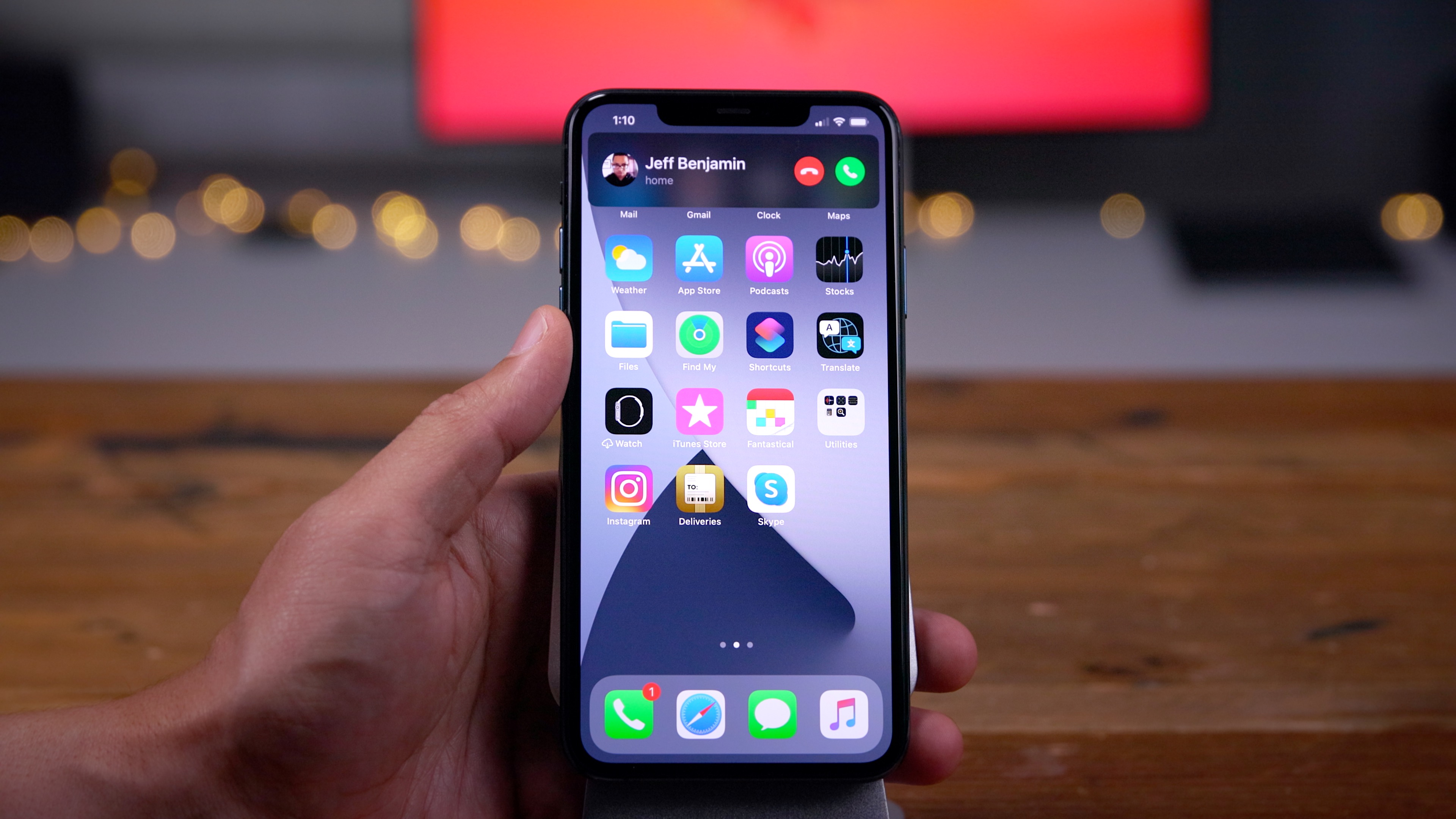
In bringing a compact incoming call interface to iOS 14, Apple has addressed perhaps one of the most requested quality of life features for the iPhone.
A jailbreak tweak called CallBar solved this problem years ago, and I’ve been wanting Apple to include such a function natively in iOS for years.
In previous versions of iOS, receiving an incoming call would present a full-screen call interface and interrupt your current task. It was a jarring experience that I never fully got used to and it made me dislike receiving incoming phone calls.
In iOS 14, incoming phone calls are relegated to a small banner at the top of the interface. This allows you to keep reading, or browsing without worrying about being ambushed by an incoming call.
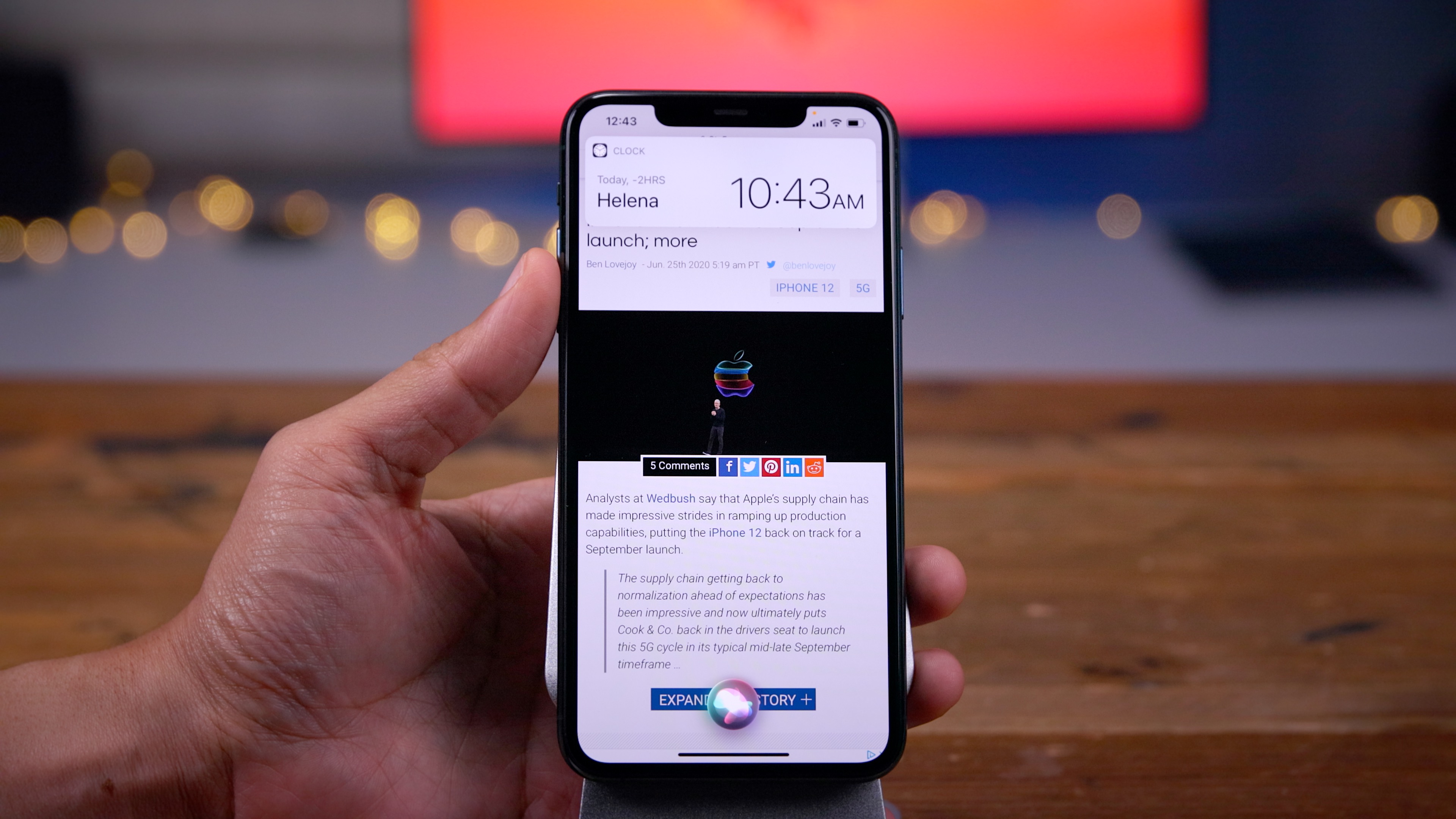
Compact Siri
Like the compact call interface, compact Siri allows users to interface with the virtual assistant without interrupting whatever current task you’re engaged in. Siri is now displayed as an overlay at the bottom of the screen, with Siri results appearing as a significantly less conspicuous banner at the top of the screen.
App Library
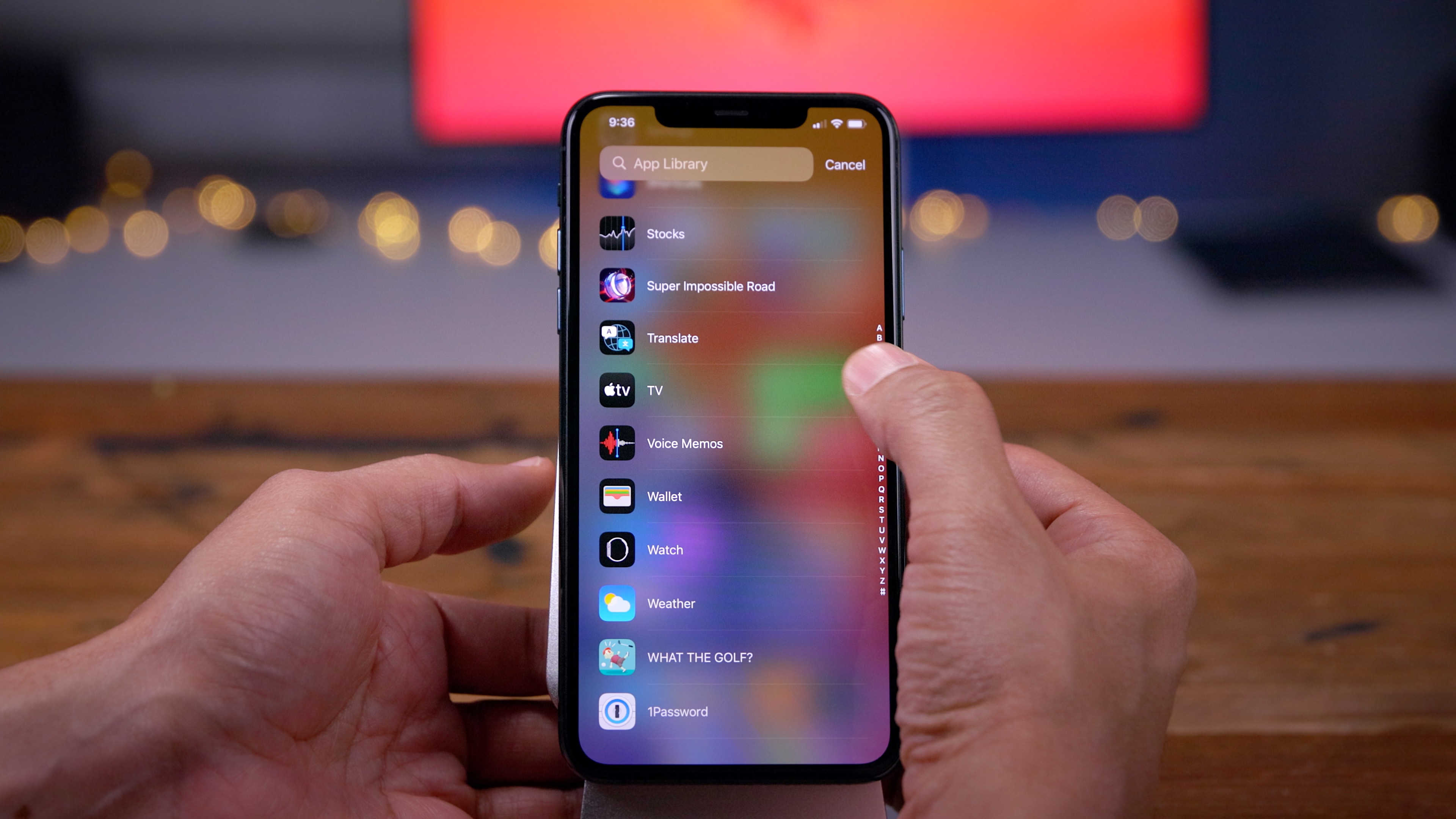
Apple’s App Library is another big win for iPhone users who have long lamented over the state of app management on iOS. Instead of being forced into adopting page after page of apps and folders, users can now add and remove app pages at will.
Regardless of what’s displayed on the traditional Home screen pages, the App Library is where all of the apps installed on your iPhone reside. There’s even a handy alphabetical list of all of the apps currently installed on your iOS device.
Improved Search
Search in iOS 14 is a big improvement over its predecessors, bringing smarter search results and launcher-like functionality to native iOS. New features include as-you-type suggestions and the ability to press the “go” button to take action and launch websites, web searches, and apps.
Of course, these five standout features are just the start when it comes to iOS 14. If you’re itching to know about all of the details, then watch our hands-on, 95-minute iOS 14 video walkthrough for the details.
For references, here’s a list of everything included in our iOS 14 beta features video walkthrough:
Initial setup
Downloading app data
Home screen
Slide through app pages
Enter edit mode from anywhere
New minus indicator for deleting apps
Edit Home screen pages
Six new iOS 14 wallpapers
App Library
Remove any app from Home screen
Automatic categorization
Suggestions
Widgets on Home screen
Edit a widget
Siri Suggestions widget
Differently sized widgets
Widget stacks
Edit a widget stack
Stack multiple weather widgets
Smart stack
Search
As-you-type search suggestions
Quick launcher
In-app search
Web search
Updated Siri Suggestions UI
Redesigned Siri Knowledge layout
Picture in Picture
Enable Picture in Picture
Customize and control Picture in Picture
Settings > General > Picture in Picture
Siri
Compact Siri UI
Send audio messages
Share ETA
Updated Siri Settings > Suggestions on Lock screen
Updated Siri Settings > Siri Feedback
Updated Siri Settings > Suggestions when Sharing
Updated Siri Settings > In Search settings
Updated Siri Settings > App Clips
Privacy
Manage app tracking
Approximate Location
Limited Photos library access
Recording/microphone indicator
Recently used indicator in Control Center
Notification when apps access clipboard
Privacy > Local Network
Use Private Address
Markup
New colors button
New eyedropper tool
Colors: Grid, Spectrum, Sliders
Opacity
Hexadecimal colors
Save colors as favorites
Shape recognition
Settings
Long press back button to go back levels
Settings > General > About > Carrier Lock
Settings > General > Customize Automatic Updates
Settings > TV > Cellular Streaming > Automatic Optimized based on data plan… Settings > iCloud > Media & Purchases
Rename Bluetooth devices
Search bar added to iPhone Storage
New Glyph when Bluetooth devices connected
AirPods now have their info in iOS Bluetooth Settings
All-new Field Test app
Family sharing
Family sharing shows avatars of all members
New Family Sharing Layout shows when joined, role, and access
“Shared with your Family” instead of shared features
Invite member now uses Share Sheet
Apple TV Channels are broken up individually
Ask To Buy
New Screen Time UI
Keyboard
Emoji search
Control Center
Updated Camera app glyphs
Home app CC toggle removed
Dynamic Home toggles added
Sound Recognition toggle
Hearing toggle shows decibel rating
Updated Control Center Settings
Accessibility
Headphone Accommodations
Accessibility Settings
VoiceOver
Magnifier
Spoken Content
Touch
Switch Control
Side Button
Audio/Visual
Siri
Accessibility Shortcut
Phone
Compact interface
Third-party VoIP calls compact interface
New audio picker
Updated tables and buttons in contacts
New contact photo options camera, photos, emoji, text
Amazon.com Inc. is boosting efforts to lure military and commercial space organizations as major users of its cloud-computing services, hoping to benefit from rising government spending and burgeoning private investment.
The move by Amazon Web Services, the online retail giant’s cloud-computing arm, comes during a multiyear surge in U.S. military and civilian agency spending on space projects, with NASA, the Pentagon and their largest contractors—including Lockheed Martin Corp.—benefiting from hefty appropriated or proposed...
June 30, 2020 at 02:17PM
https://ift.tt/2YLXNxC
Amazon Launches Space Push to Drive Cloud-Computing Growth - The Wall Street Journal
The term “general purpose” in regards to compute is an evolving one. What looked like general purpose in the past looks like a limited ASIC by today’s standards, and this is as true for GPUs and FPGAs as it is for CPUs.
There is much talk about the era of general purpose computing being over, but we think that it is probably more accurate to say that the era of CPU-only computing – with the CPU being the only general purpose compute engine available for many decades – is over. If general purpose means being able to run lots of different kinds of applications and do lots of different kinds of compute, a fair argument could be made that over the past decade, GPUs and FPGAs have been just as “general” as CPUs. Perhaps moreso. And this would be true without question if Nvidia had gone through with “Project Denver” and embedded Arm cores onto its GPU motors, which was announced in early 2011 and canceled a few years later. And it certainly is true for the FPGAs from Intel and Xilinx, which have embedded Arm cores and which have more kinds of compute than you can shake two sticks at.
We have come a long way from the first generation of so-called “general purpose graphics processing units,” or GPGPUs, that Nvidia launched way back in 2006 with the “Tesla” G80 GPUs and evolved substantially in 2010 with the “Fermi” GF100 and GF104 GPUs, and really kicked it in with the “Kepler” GK104 and GK110 GPUs two years later. As workloads have been added to GPUs, they have gotten more general, expanding from raw floating point compute to accelerated HPC to accelerated AI training, ending up with a mix of integer, floating point, and matrix math capability in the end.
With the “Ampere” GA100 GPU, as we discussed at its launch and analyzed further in the deep architecture dive that followed it, Nvidia is essentially converging the jobs performed by its prior generation “Volta” GV100, used in the V100 accelerators, and “Turing” GT104 GPUs, used in the T4 accelerators as well as GeForce cards. Volta was the HPC simulation and AI training engine that was also useful for database acceleration and certain kinds of analytics workloads like the Spark in-memory platform. Turing was aimed at AI inference as well as graphics related to virtual desktop infrastructure (where the GPU is carved up into slices), to technical and artistic workstation applications and to gaming. With Ampere, the GA100 GPU is carved up into eight slices, which can look like eight next-gen Turing accelerators or ganged up to look like a next-gen Volta accelerator – and importantly, this personality choice is set by the user, not by Nvidia for its own SKUs and profit margins.
During the ISC 2020 Digital supercomputing conference last week, Nvidia launched the PCI-Express 4.0 variant of the A100 accelerator, as you can see below:
There is not a lot of difference between the SXM variant of the A100 and the PCI-Express card variant, except that the six NVLink ports on the SXM version can deliver 600 GB/sec of bandwidth into and out of the device while the x16 lanes in the PCI-Express 4.0 version can deliver only 64 GB/sec. To be fair, for those used to PCI-Express 3.0 peripherals, both will seem fast. It is also less costly to get the PCI-Express 4.0 version. Nvidia does not give out pricing on its GPU cards, of course, but we have worked with some resellers and system builders to get a sense of what old and new GPU accelerators cost on the market
We already went through the salient characteristics and performance using various data formats and processing units of Nvidia GPU accelerators from Kepler through Ampere in the architectural deep dive we did at the end of May. Now, we are going to look at the cost of Ampere A100 accelerators relative to prior generations at their current street prices. Ultimately, this is always about money as much as it is about architecture. All of the clever architecture in the world doesn’t amount to much if you can’t afford to buy it.
In the table below, we show the price, bang for the buck, and bang for the watt of the past four-ish generations of GPU accelerators (counting Turing as its own generation makes four in addition to the Pascal, Volta, and Ampere GPU accelerators). There are a lot of different performance metrics we can look at, and that is particularly true when considering sparse matrix support for machine learning inference. In this comparison, we assume the best case scenario using the various data formats and compute units as well as sparse matrix calculations when calculating performance per watt and performance per dollar. We also being it all together in the mother of all ratios, dollars per performance per watt, which is the be-all, end-all calculation that drives architectural choices at the hyperscalers and cloud builders.
Take a look at this table:
That’s just a subset of the data about server-class GPU accelerators from Nvidia that we have compiled over time. We have this big table that goes all the way back to the Kepler GPU accelerators, which you can view in a separate window here because it doesn’t fit in our column width by a long shot. This is the companion set for the two tables we did in the architectural dep dive, but as we said, now we are making performance fractions with watts and bucks.
The first thing that we wanted to point out is that if the electric bill for your compute farm is paid for by another division or group at your company, then you might want to consider using Kepler-class K20, K40, and K80 GPU accelerators, which have street prices of $250, $500, and $900 a pop right now and which have the best FP32 and FP64 bang for the buck across six generations of GPU accelerators in the past eight years. We do not have historical pricing data for each and every one of these GPUs or we would show price/performance improvements over time.
What we can say since the Pascal generation is that performance and price/performance have generally improved and for a while there during the early Volta era three years ago, GPUs were in such high demand and in such relatively short supply that Kepler, Maxwell, and Pascal GPU accelerators were holding up in value more than you would expect based on the fact that Volta GPU accelerators were just so much better in terms of having more oomph and being more general purpose. This is how economics works, despite the best efforts of vendors who want to relegate their older products to the dustbin as soon as possible.
But eventually, new stuff has such a price/performance or performance/watt advantage that the old stuff has to lose value. This is happening, finally, with the P100 and V100 accelerators, in fact, which sell for around $5,000 and $7,500, respectively, right now in the SXM form factor. (You have to back out the cost of HGX motherboards and networking to get that based SXM price, and luckily some Nvidia partners helped us do that.) The A100 SXM, when you back it out of the DGX A100, has a street price of around $10,000 right now – a little bit less than the $11,500 that Big Blue was charging initially for these devices as part of its Power Systems AC922 supercomputer nodes when they debuted back on December 2017. That V100 SXM has lost 35 percent of its value in three years, as we think for a while there these V100 SXMs were selling for closer to $15,000 on the street because of demand. As best as we can figure, the PCI-Express 4.0 version of the A100 accelerator will sell for around $8,500.
Some things jump out immediately to our eyes in this chart. For one thing, no matter how much Nvidia loves the T4 accelerator for machine learning inference, any company that has to do both inference and training and that might also have database acceleration and HPC work as well is not going to buy separate GPUs for inference. With the sparse matrix support and running INT8 data through its FP32 units, the A100 SXM costs $8 per gigaops and the A100 PCI costs $7 per gigaops, and the T4 costs somewhere around four times as much per gigaops. The performance per watt is around 4X better, too, between the T4 and the A100 as well. And the T4 accelerator has very low FP64 performance, making it a poor choice, at just under $4,000 a pop, for running any HPC or AI training workloads that require 64-bit floating point. The T4 is 31X more expensive per unit of FP64 performance. It is only a good choice where only the smallest fraction of the workload is FP64.
There is a reason why Nvidia went with a more general purpose design with the Ampere, and this illustrates it well.
The other interesting thing to note is that the Volta V100 accelerators, whether PCI or SXM variants, have a slight premium per unit of work compared to their Pascal P100 predecessors. There is nothing odd about this, but it is a very slight premium in terms of performance per dollar. That’s the surprising part. And for INT8 workloads, the P4 and P40 accelerators based on the Pascal chips, which are in a PCI form factor, are also holding up pretty well and have not, as yet, lost all of their value in the market.
If you are going for strict bang for the buck and flexibility across data formats and crunching bitness, then the PCI version of the A100 accelerator is hands down the best of Nvidia’s GPUs right now if you use the TF32 format and also use sparse matrix support for integer operations. If your software doesn’t support these, you can you regular FP32, but the advantages are not as large.
One last thing to note: The gigaops or gigaflops per watt figures shown in our tables are at the device level, not at the system level. They are also peak theoretical performance and now sustained performance on a test such as the High Performance Linpack (HPL) or its AI variant, HPL-AI, benchmark test. So the gigaflops per watt figures are consequently much, much higher than what you see on, say, the Green500 rankings, which includes the whole system including networks and storage and its power and cooling.
How Nvidia Measures Bangs And Bucks
As part of the Ampere rollout, Nvidia released some HPC and AI benchmarks to give customers a sense of how real-world applications performance on the A100 accelerators and how they compare to the previous Turing and Volta generations as appropriate. Here is a market basket of HPC applications ranging from molecular dynamics – particularly important now with the hunt for a vaccine or treatment for COVID-19 top of mind – to physics, engineering, and oil & gas seismic processing.
These are initial tests, and we have a strong suspicion that over time as the software engineers get their hands on Ampere accelerators and update their software, the performance will get even better. There is precedent for this, after all. Here is the performance over time of a market basket of HPC, AI, and data analytics workloads from 2016 through 2020 on the Pascal, Volta, and Ampere accelerators:
Now, we reckon that performance improvements in the AI stack, thanks to the use of increasingly mixed precision and the Tensor Core units, has risen more dramatically and is bringing up the class average. A lot of the gains in HPC have already been made by shifting from CPUs to GPUs and using technologies like GPUDirect, but there is now 64-bit processing on the Tensor Cores, so that gives 2X the performance over the plain vanilla FP64 units on the Ampere A100 accelerator. Our best guess is that the HPC applications in the chart above are not running on the Tensor Cores, so there is headroom for the software to catch up with the software and double the performance for these applications. So maybe when everything is all tuned up, it will be somewhere between 15X and 20X improvement on the same A100 hardware this time next year.
The important thing to note in that chart is how performance improved on the V100s with no changes in the hardware but lots of changes in the software, both in 2018 and 2019. There is no reason to believe that the features in the Ampere GPU will not be exploited to the hilt – eventually – by HPC software as much as by AI software. The stakes are just as high, and the software engineers are just as smart.
That brings us to AI by itself. The AI training models are getting more complex, with more and more layers of algorithms, both forward and backward propagation ricocheting like a laser beam before it comes out OF the mirror to cut through steel, and this is requiring an exponentially growing amount of compute. Like this:
The test of choice for natural language processing, which is exponentially more complex than the image processing that was the benchmark of choice (ResNet-50 being the specific test) for the past couple of years, is the BERT test, which is short for Bidirectional Encoder Representations from Transformers. We told you about BERT last August, when Nvidia was positioning NLP as its next big AI workload, and one that would drive the requirements of devices like the Ampere GPU. BERT was, of course, developed by AI researchers at Google in 2018. The BERT-Large model had 340 million parameters is was chewing through, but Nvidia’s Project Megatron implementation of BERT scaled up to 8.3 billion parameters. ResNet-50 was handling a mere 26 million parameters to do its image processing. Bah.
In the architectural reference for Ampere, here is how Nvidia stacked up BERT performance for NLP training and inference:
For training on the BERT-Large model, a DGX A100 server using eight A100 GPU accelerators linked by NVSwitch and using the TF32 format was able to process 1,289 sequences per second, compared to 216 sequences per second on a DGX-1 server with eight P100 accelerators operating with FP32 data in the FP32 units. That’s just a tiny bit under a factor of 6X improvement. Nvidia could have given inference numbers for the Volta or Turing GPUs here, but decided to compare to the most popular inference engine in the datacenter, the Intel Xeon SP CPU. In this case, a pair of Intel “Cascade Lake” Xeon SP-8280 processors running INT8 against a DGX A100 server with sparsity support enabled on the INT8 units. The Intel server could handle 58 teraops, while the Nvidia DGX A100 server could drive 10 petaops or 172X as much. (This appears to be peak theoretical performance.)
This chart, shown during the Ampere GA100 GPU launch, was explicit about BERT training and inference, normalizing performance for a single unit against that for the T4 and V100 where appropriate:
For BERT-Large training, the V100 was written in PyTorch and used FP32 precision, while the A100 used TF32 precision. (This is essentially the same data as above.) For BERT-Large inference, the T4 and V100 accelerators used FP16 operations, while the A100 used seven of the eight GPU slices (all that are currently turned on in any of them) and used INT8 with sparsity support turned on.
The upshot of all of this, according to Jensen Huang, Nvidia’s co-founder and chief executive officer, is that companies that are building AI training and inference systems can throw away a whole lot of CPU servers that are used for inference and converge the two workloads onto DGX A100 systems and be done with it. Here are the ratios that he gave out during the Ampere launch:
Now, as far as we know, it is very, very difficult to fully populate a rack with DGX A100 systems, or even DGX-2 systems, because of the compute density and as you can see from Nvidia’s own SuperPOD configurations used with its Saturn-V and Selene supercomputers, the company does not even half fill its racks for this reason.
“The DGX A100 server can be configured as eight GPUs for training or 56 GPUs for inference,” Huang told us at the Ampere launch. “All of the overhead of the additional CPUs and memory and power supplies and so on collapses 50 servers down to one, and it is going to be able to replace a whole bunch of different servers. This is going to unify that infrastructure into something that is more flexible and increases its utility and the ability to predict how much capacity you will need.”
More and more is a pretty good guess.
June 30, 2020 at 07:22AM
https://ift.tt/2NI7yHa
The New General And New Purpose In Computing - The Next Platform









/article-new/2021/06/iphone-13-duan-rui2.jpeg?lossy)


